Robert Menard,  Certified Purchasing Professional, Certified Professional Purchasing Consultant, Certified Green Purchasing Professional, Certified Professional Purchasing Manager

Robert Menard

Certified Purchasing Professional,
Certified Professional Purchasing Consultant, Certified Green Purchasing Professional, Certified Professional Purchasing Manager

A story in ENR , a flagship periodical of the engineering and construction industry published by McGraw-Hill cites the conversion of a northwest Ontario power plant, Atikokan Generating Station, from coal to biomass, principally forest waste products  a sustainable fuel.  Unfortunately, as is often the case in the press that disfavors coal, the whole truth is obscured.   According to Ontario Power Generation’s (OPG)’s web site, “…the Atikokan Generating Station… has one coal-fuelled generating unit that produces up to 211 megawatts (MW) of electricity, using low-sulphur lignite coal from Western Canada.”  The ENR story relates a $170 million retrofit to transform the 28 year old plant from coal to biomass to comply with government dictates to remove coals as a fuel by 2014.  The plant’s station manager, Brent Boyko, states that “The biomass fuel source cuts emissions but retains the plant’s ability to generate 205 MW of electrical power.”

Here is the missing and overwhelmingly essential information.  OPG’s site states that, “In the past decade, annual electricity production has been as high as 1 billion kilowatt-hours (kWh), enough to supply about 83,000 homes for a year. More recently, due to economic downturn and emission regulations, Atikokan role has changed to providing reliability during peak demand times and back up electricity generation when other sources are not available.” (Emphasis supplied) 

This is a stunning omission in the ENR story.  Decreasing capability from 1 billion kWh (equal to 1,000 MW) to a mere 20% shadow of its former capacity represents a massive downgrade.  The same story also does not specify the huge inherent advantage of coal, expressed in Btu/$, over biomass.  My book, Green Purchasing & Sustainability , the basis for the Certified Green Purchasing Professional  conferred by the American Purchasing Society clearly proves that coal has about 500% greater value (Btu/$).  Doing the math, the retrofit plant will have 1/5 of the generating capacity because the feeder fuel has 1/5 of the Btu/$ capability.   

The ENR story further cites the Sierra Club , dictates of the US  Environmental Protection Agency and both US and Canadian government regulations.  What it does not state is that the ultimate cost to the consumer will be a staggering price increase in electrical power as is obvious in the economically silly switch from high energy intensive fuel to clearly sustainable although inefficient fuel. 

As the old NFL ad campaign http://www.youtube.com/watch?v=lzQb7AnnFJo liked to say, “You make the call.”


Robert Menard,  Certified Purchasing Professional, Certified Professional Purchasing Consultant, Certified Green Purchasing Professional, Certified Professional Purchasing Manager

Robert Menard

Certified Purchasing Professional,
Certified Professional Purchasing Consultant, Certified Green Purchasing Professional, Certified Professional Purchasing Manager


There may be no more frustrating issue for participants in my purchasing training seminars  than that of single and sole sources.  It arises often, is poorly understood, and few know how to handle the challenges.  Singe and sole sources are different problem with different solutions.  Even the meaning of single and sole gets confused so let’s first define the terms.   

A single source is one chosen at the purposeful exclusion of others.  This partnering type of relationship usually evolves over time and is built upon the foundation of lowest Total Cost of Ownership .  A sole source is one where you have no other choice.  Usual causes are patented products/services, geographic rarity, and customer/end user requirement.   

The single source is easier to manage provided your supplier management systems are robust.  The buyer and seller concentrate on removing cost from the system at every opportunity.  Generally, fewer problems are encountered and each party shares in the greater profitability that derives from the lowest TCO. 

This success just does not materialize by happenstance.  It begins with a vigorous supplier certification system.  If all you require to hire a supplier is a Pulse and a Price”, expect to be in deep into hot water at the worst possible time.  A strong supplier evaluation system built around TCO is mandatory.  Anyone who touches the process in a significant way should have input.  Problems that arise are analyzed with a thorough post-mortem, including root cause analysis, and a solution put in place that eliminates a repeat.  All this is easy to say, much work to do, but with good supplier management, worth every penny of investment.  Otherwise, it may be time to change suppliers. 

With a sole source, buyers generally start out at a steep disadvantage.  The first question to answer is, “How much of a burn is this problem?”  For instance, I once had a consulting client who whose tail was twisted because the supplier of a very popular author’s books (which became a hit movie series about kids and witchcraft) had jacked up the price to nearly double.  Upon resale of the product, my client was taking in four times the margin.  This is not a bad problem to have and is a wave worth riding.  Don’t worry your tail being twisted if your pocket is being filled. 

If the burn hurts, then you must decide if this is a book of business worth keeping.  Such may be an executive management decision.  In no case, however, should you roll over.  Start with the Dutch Uncle speech that sounds like this.  “Mister or Madame Supplier, we need to resolve a problem because if we cannot, I cannot sell to my customer and will no longer be a customer to you so what can we do?”  The supplier may not care, in which case, it is better to know.  At least, you have given them a chance to salvage the sole source relationship.   

If the sole source is due to a patent or a geographic rarity (the mineral Rhodium is an example, so is air travel in many countries), you have a tougher job.  You can try to qualify a substitute (often said and rarely done) or seek other means, such as train travel.  Usually, the alternative is worse than the status quo in terms of TCO.   

Click to see Bob's online training courses

Click to see Bob’s online training courses

About the best of these sole source situations is the customer/end user requirement.  In one such case years ago, my client’s customer, a big 3 auto manufacturer, specified the sub-assembly supplier we were mandated to by from the customer selected manufacturer.  The supplier was cocky and felt bullet proof.  The quality was superb but delivery was awful, service non-existent, and the price was what the big 3 customer specified.  We documented the supplier’s failures, including one in which we could not supply our assembly because of the sole source supplier’s stock out.  This problem culminated in a ”Come to Detroit” meeting in which the supplier was read the riot act and was forced to reimburse my client for its liquidated damages assesses by my client’s customer due to the sole source’s failure.   

None of this is easy but you must be assiduous in your efforts, especially with sole sources. 


Robert Menard,  Certified Purchasing Professional, Certified Professional Purchasing Consultant, Certified Green Purchasing Professional, Certified Professional Purchasing Manager

Robert Menard

Certified Purchasing Professional,
Certified Professional Purchasing Consultant, Certified Green Purchasing Professional, Certified Professional Purchasing Manager

Why bring education and training to your site?  Because it makes your return pay off many multiples of the investment.  Click for a 1′ 42″ video

I have had the good fortune over the past two decades to write and deliver more than 2,000 seminars to tens of thousands of fellow supply chain pros spread out over airline trips of hundreds of thousands of miles.  What I have learned is that there is always a need for education and training in our profession.  Purchasing is the Rodney Dangerfield of business, “I tell you we get no respect” even though every dollar we save flows undiluted to the bottom line.

Contrast that to the sales efforts that nets 5% on every sales dollar, a mere nickel versus every dollar saved by purchasing that flows undiluted to the bottom line.  Purchasing has a twenty times greater impact. 

Do your profitability a favor and call 214.513.8484 or email RobertMenard@RobertMenard.com to learn how we can collaborate on 2, 3, or more day in house seminars.  We’ll customize it to satisfy your needs, whether basic, advanced, broad or specific. 

The exercise driven nature of these seminars will is what adult education and training is all about.  The interaction drives the learning.  There is nothing theoretical.  We build in work place challenges and can pivot to others that arise

I’ll return your contact soon after receipt with lists of deliverables and a content menu.  For references, see my site or LinkedIn,.


Robert Menard,  Certified Purchasing Professional, Certified Professional Purchasing Consultant, Certified Green Purchasing Professional, Certified Professional Purchasing Manager

Robert Menard,

Certified Purchasing Professional,
Certified Professional Purchasing Consultant, Certified Green Purchasing Professional, Certified Professional Purchasing Manager

The value of professional certifications in purchasing is an unassailable asset.  It is the singular best way to demonstrate devotion to the buying profession and thereby to be of greater value to the employer.  A more compelling motivation is that those pros who earn certifications earn more moneyAre you unsure or perhaps unaware of how certifications impact your career path?  Here is a short post on the question of if certification is for youThis post will provide further justification of why you must pursue certification.   

 So which certifications should you earn?

 There are four recognized certifications, each requiring different competencies and skills.  These are the Certified Purchasing Professional (CPP), Certified Purchasing Professional Manager (CPPM), Certified Green Purchasing Professional CGPP), and Certified Professional Purchasing Consultant (CPPC).  Let’s examine each one.

 The Certified Purchasing Professional (CPP) is a fundamental designation that every serious buyer should earn.  The object of the online preparation course  is to prepare experienced buyers, purchasing agents, and purchasing managers for the CPP examination. This course covers the essentials of the purchasing process, and the organization and management of the purchasing function. Portions of the course will cover aspects of accounting and other business functions that purchasing professionals should know. Separate sections of this course are devoted to ethics, inventory, the law, and mathematics. This full version also includes the study guide, examination, and the self-running required courses Business Ethics for Buyers and Sellers, Math for Purchasing and Business, Managing Inventory – Maintaining the Proper Level, and Essential Law for Buyers and Sellers. The full version is three weeks in length and the examination is taken during the last weekend of the course. The different parts of this course are self-running and online. They can be taken at any time of the day and whenever is convenient to the student. An instructor is available for questions, directions and guidance.

 The Certified Purchasing Professional Manager (CPPM) requires the CPP as a pre or co requisite.  The object of this online preparation course  is to prepare experienced buyers, purchasing agents, and purchasing managers for the Certified Professional Purchasing Manager examination. Knowledge of the content of the course will contribute to success in taking the examination. The course covers various topics that all purchasing managers should know well, including organization structures, business objectives and functions, purpose and duties of management, human resource and the law, diversity, accounting, economics, and many others. This course is three weeks in length and the examination is taken during the last weekend of the course. The different parts of this course are self-running and online. They can be taken at any time of the day and whenever is convenient to the student. An instructor is available for questions, directions and guidance. Although there are additional requirements involved, the completion of this course and successful passing of the examination meets the exam and online course requirements for certification. The instructor sends students an email with initial instructions for the course the weekend before the course is scheduled to begin.

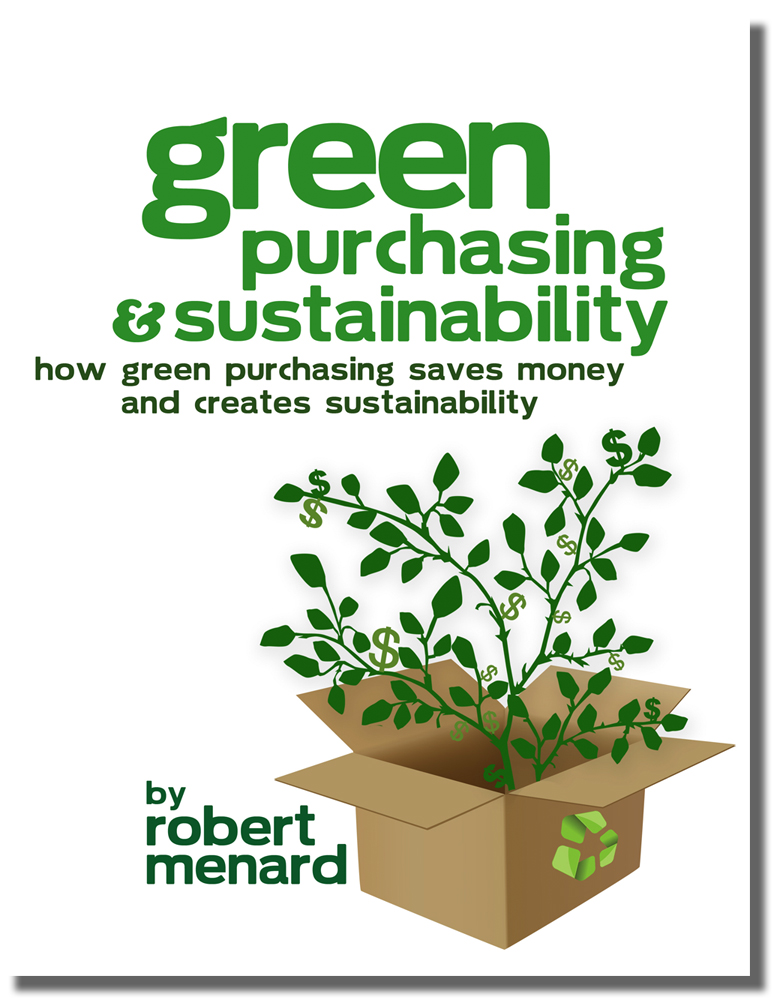
green_purchasing_shadow The Certified Green Purchasing Professional (CGPP) meets the demand for sustainability in purchasing.  Sustainability is all about preservation and conservation, synonyms for savings, the province of the purchasing profession.  This online course  includes the work book Green Purchasing and Sustainability , the two-part self-running course titled “Green Purchasing and Sustainability”, and the CGPP examination. The work book is a hard skills manual for “how-to” go green and making money doing it. The course demonstrates how sustainability impacts our professions and how purchasing can take an active role in it. It will give practical and reasonable steps that purchasing can take to not only help its company become “greener” but to also do what purchasing does best, reduce costs.

 As more and more executive decisions include sustainability, buyers and purchasing managers need to learn how they can be part of the process before the policies and procedures are set in place. Sustainability is quickly developing and changing, and the sooner purchasing professionals begin to learn about the subject and current things that they can do to encourage and embrace it, the better position they will be in for the long-term future. Students will be taught what purchasing’s role is in sustainability, how to develop a green purchasing plan, how it can be included in facilities practices, how to utilize the 3Rs, energy savings ideas, and more.  We recommend that you complete the online course before moving onto the workbook.  A coach will be available to help with any questions during the 45 day preparation study period.  Watch a one minute video about CGPP.

The Certified Professional Purchasing Consultant (CPPC) designation is for Certified Purchasing Professionals (CPP) who either consults or teaches purchasing to people outside of their own employer.  It is a rare and unique designation that requires a broad array of skills and experience.  Please contact the Society for more details about the CPPC.


Robert Menard,  Certified Purchasing Professional, Certified Professional Purchasing Consultant, Certified Green Purchasing Professional, Certified Professional Purchasing Manager

Robert Menard,
Certified Purchasing Professional,
Certified Professional Purchasing Consultant, Certified Green Purchasing Professional, Certified Professional Purchasing Manager

Many purchasing and supply chain pros are interested in online education and training.  It is a convenient medium that is accessible at any time.  Further, when sponsored under the aegis of an authority such as the American Purchasing Society, the quality is assured. 

Many folks wonder and some outright ask which courses are best for them.  The answer is entirely dependent on individual circumstances.  For instance, the experience of two decades in the purchasing and negotiation training business proves that negotiation is the overall favorite.  Everyone wants to feel more comfortable, confident, and competent in negotiation.  For this large majority, The Science and Art of Negotiation is for you. 

That said, having done more than a thousand live seminars for purchasing pros over two decades, the subject of how to buy automobiles arose at very many.  To address this perennial interest, see How to Buy a New or Used Car. 

The American Purchasing Society and I have developed a variety of course that serve the emerging and veteran purchasing professional.  For a full list of online courses provided, click on this link

 This short video lists others such as Body Language  which is essential to the mastery of negation because of the overwhelming non-verbal communication contribution.  Applied Cost and Price Analysis was created to suit the demand voiced by many professional buyers.


Robert Menard, Certified Purchasing Professional, Certified Professional Purchasing Consultant, Certified Green Purchasing Professional

Robert Menard, Certified Purchasing Professional, Certified Professional Purchasing Consultant, Certified Green Purchasing Professional

Look for release in the early spring of Spend Analytics Using Excel, a course developed by professional buyers for professional buyers.If you are among the vast majority of purchasing pros, your enterprise wide software is notoriously weak in spend analytics and reporting capability. Unless you enjoy the horsepower of the giants in the enterprise software industry, or have one of the “Cadillac” purchasing software products, you are, like most of the rest of us, at the mercy of the enterprise software product. Well, we resourceful purchasing pros are never without alternatives. While we cannot solve the software problem, we can solve the spend analytics and reporting by resort to an Excel spreadsheet.

Help is on the way in the form of a new online training course called Spend Analytics and Excel. This course is being developed jointly with the American Purchasing Society. It will not delve deeply into mathematics but will demonstrate in step by step fashion, including short tutorials for those “Excel averse” types, the purchasing analytics that will optimize your effectiveness.

We will show how to use Excel to analyze supplier responses to RFQs, to evaluate supplier performance, to project demand forecasting and replenishment models, even to analyze supplier financial health. You’ll learn shortcuts on sorting, presenting, and analyzing data so you can make sound decisions based upon user friendly dollars and numbers that you have created out of raw data.

Click Spend Analytics Using Excel for a one minute video about the course. Below is the text of the spoken greeting.

Most of us use Excel for spend analytics but how to get the most out of it is a mystery – not any more. This online course will demonstrate in step by step fashion, including short tutorials for those “Excel averse” types, the purchasing analytics that will optimize your purchasing effectiveness. You will learn how to use Excel to analyze supplier bids, evaluate supplier performance, create pivot tables and charts, and refined visuals. The course demonstrates how to use statistical techniques to spot waste, eliminate duplication, and harvest cost savings. You’ll learn shortcuts on sorting, presenting, and analyzing data so you can make sound decisions based upon user friendly dollars and numbers that you have created out of raw data.

Robert Menard, Certified Purchasing Professional, Certified Professional Purchasing Consultant, Certified Green Purchasing Professional

This is the second part of the November of 2012 webinar sponsored by My Purchasing Center called Purchasing Salaries–What They Are and How to Negotiate Them. Along with friend and professional colleague, Dr. Harry Hough, President of the American Purchasing Society, we advised an audience of about 200 on how to learn about salary information and negotiate better offers. Dr. Hough led off the one hour event with an overview of the Society’s Annual Salary Survey conducted with a large national sample. He spoke of the powerful influence of education and training as the surest and quickest path to higher earnings.

I followed up with specific advice on how to view and manage the job search as a live negotiation laboratory. Throughout our talks, we took as many questions as time permitted in the one hour event. The entire recording is available in MP3 format.

Here is the link to my talk. Robert Menard MPC Salary Survey

Contact me when I may be of service.

Robert Menard, Certified Purchasing Professional, Certified Professional Purchasing Consultant, Certified Green Purchasing Professional

Robert Menard, Certified Purchasing Professional, Certified Professional Purchasing Consultant, Certified Green Purchasing Professional

In November of 2012, I had the good fortune to participate in a webinar sponsored by My Purchasing Center called Purchasing Salaries–What They Are and How to Negotiate Them. Along with friend and professional colleague, Dr. Harry Hough, President of the American Purchasing Society , we advised an audience of about 200 on how to learn about salary information and negotiate better offers. Dr. Hough led off the one hour event with an overview of the Society’s Annual Salary Survey conducted with a large national sample. He spoke of the powerful influence of education and training as the surest and quickest path to higher earnings.

I followed up with specific advice on how to view and manage the job search as a live negotiation laboratory. Throughout our talks, we took as many questions as time permitted in the one hour event. The entire recording is available in MP3 format.

Here is the link to Dr. Hough’s talk. Dr. Hough MPC Salary Survey

Contact me when I may be of service. The next blog post contains the link to my negotiation advice. Best wishes to all job seekers.

Robert Menard, Certified Purchasing Professional, Certified Professional Purchasing Consultant, Certified Green Purchasing Professional

Robert Menard, Certified Purchasing Professional, Certified Professional Purchasing Consultant, Certified Green Purchasing Professional

Social media is today analogous to what web sites were fifteen years ago, a de rigueur component of business.  In the late 1990s, as more folks flocked to the internet, obtained email addresses, and discovered a wealth of information (and in some cases, disinformation) online, businesses and consumers expected to be able to research and transact business online.  Amazon  was then, and remains, a principal player in moving commerce to the digital world.  Prospects, customers, and suppliers expect to find business partners not only with web sites but also social media footprints.  

Today’s social media is far more than a means of communication.  It comprises multiple marketing and sales channels.  Further, most all forms intertwine.  That is, if you post on LinkedIn, you can elect to automatically post to Facebook, Twitter, and so many other media vehicles.  

To serve the demand of members and the purchasing community at large, the American Purchasing Society  maintains a Facebook  fan page and a LinkedIn company page

In keeping with LinkedIn’s appeal to professionals, the Society’s company page has detailed information on its products and services.  Please visit the Society’s company page when you have a moment and let the Society know what you think of the company page at propurch@propurch.com

Robert Menard, Certified Purchasing Professional, Certified Professional Purchasing Consultant, Certified Green Purchasing Professional

Robert Menard, Certified Purchasing Professional, Certified Professional Purchasing Consultant, Certified Green Purchasing Professional

Most of us are aware of LinkedIn’s networking potential. I have become acquainted with any fellow purchasing professionals as a result of participation in discussions on issues of interest to us. Sure, there is some spam and folks nakedly hawking their wares but that in your face type of “push marketing” tends not to fare will amongst the purchasing crowd.

But were you aware of LinkedIn’s communication power? If you have not updated your profile recently, try doing so. A notification will be automatically generated advising folks in your network of the changes to your profile. It is a good way to get news out, provided it is of value to your network.

Several connections on LinkedIn have contacted me to say they searched for online courses and could not find any on my profile. In a conversation with one woman, I explained that I did not push my online courses and they were available on my site  as well as the American Purchasing Society.

She advised me to put all my publications, books, CDs, MP3s, and online courses on my LinkedIn profile so I did and reciprocated with a gift for her help.

Here is the list of my publications now available on LinkedIn. Thanks everyone!

PUBLICATIONS

You’re the Buyer – You Negotiate It!

The first ever negotiation book to emphasize the value of purchasing to the bottom line. It has a conversational tone, readability, and practicality that will keep you interested, enlightened and ready to take on any kind of negotiation in your personal and professional life.

Negotiation Tactics and Counter Tactics

A 2 CD set (also available as an MP3) concentrates on the tactics and counter tactics that most students of negotiation want to lean about first.

Negotiation Communication Skills and Personality Management

A 3 CD set (also available as MP3) that focuses in on the communication skills and how to deploy them in negotiation settings. Also, these CDs demonstrate on how to manage the personality types that appear in negotiation.

Green Purchasing and Sustainability

It is a myth that going green costs money! Green purchasing earns sustainability gains in tandem with cost savings. Purchasing is best positioned to harvest savings from the sustainability tree throughout the supply chain and should lead the revolution.

The Science of Negotiaton

The Science of Negotiation ONLINE COURSE includes instruction on the total cost of ownership, negotiation planning, concession behavior, win-win and other strategies, and tools and techniques used by the best negotiators.

The Art of Negotiation

The Art of Negotiation ONLINE COURSE includes speaking and listening communication skills, communication techniques, personality issues, and tactics and counter tactics.

Body Language

Body Language, an ONLINE COURSE helps you deal with suppliers by providing insight on how to read the gestures, body positions, and movements that reveal what the other person is feeling and how he or she is reacting. It will help you determine if the person is telling the truth, if the person is sincere, and if the person is hiding their opinion and motives. Being able to properly assess a person…more

Green Purchasing and Sustainability

This ONLINE two-part COURSE demonstrates how sustainability impacts our profession and how purchasing must take an active role in it. It will give practical and reasonable steps that purchasing can take to not only help its company become “greener” but to also do what purchasing does best, reduce costs. As more and more executive decisions include sustainability, buyers and purchasing managers…more

Applied Cost and Price Analysis

Cost and Price Analysis skills are amongst the most effective purchasing management tools. They reduce prices by eliminating unnecessary costs which leads to mutually beneficial results for supplier and customer. This ONLINE COURSE equips you with these essential skills.

The eight most common Pricing Strategies revealed and explained

How to Buy a New or Used Car

Many of us overpay when we buy a new or used car. This ONLINE COURSE demonstrates how to save hundreds, maybe even thousands, of dollars when you buy a new or used car. You will learn the best places to find information about the car you want and how to negotiate with the seller. It discloses how pricing methods may mislead and how to avoid being deceived. It will tell you about different ways to finance the car. It will give you information about leasing compared with buying. It will give you what you need to know about trading in your old vehicle. The course covers certified cars and service agreements. What you learn will help you now and for many years in the future.